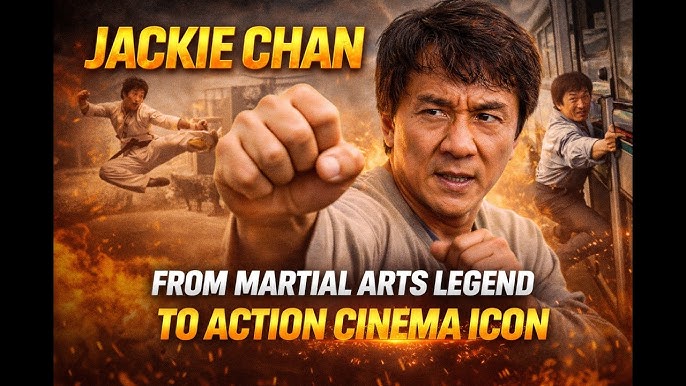
Jackie Chan: The Legend Who Changed Action Movies Forever
🔑 Key Takeaways
- Jackie Chan was born on April 7, 1954, in Hong Kong.
- He has starred in over 150 films across six decades.
- He trained at the China Drama Academy from age 7.
- He does most of his own stunts and has broken nearly every bone in his body.
- He is a UNICEF Goodwill Ambassador and active philanthropist.
- He won an Honorary Academy Award in 2016.
- He is known as “Dà Gē” (Big Brother) by fans and co-workers in Asia.
Who Is Jackie Chan? A Quick Introduction
Jackie Chan is one of the most famous actors, filmmakers, and martial artists in the world. Most people in the United States know him from movies like Rush Hour, Shanghai Knights, and The Karate Kid remake. But his story goes way deeper than Hollywood. He built his career in Hong Kong over many years before American audiences even knew his name.
What makes Jackie Chan special is not just his kung fu skills. It is the way he mixes comedy with action. He turns dangerous fight scenes into something funny and clever. No other actor does it quite the same way. He has been doing this for over 50 years, and he is still going strong today.
If you want to understand pop culture, action movies, or even global entertainment, you have to understand jackie chan. He changed what movies can be. He proved that one person with talent, hard work, and a good sense of humor can win over the whole world.
Early Life and Childhood of Jackie Chan
Jackie Chan was born Chan Kong-sang on April 7, 1954, in Victoria Peak, Hong Kong. His parents, Charles and Lee-Lee Chan, worked for the French Ambassador. The family did not have much money. Life was tough from the very start.
His parents almost sold him at birth to a British doctor because they could not afford to keep him. Thankfully, they changed their minds. But when Jackie was just 7 years old, they had to move to Australia for work. They could not take him with them. So they enrolled him in the China Drama Academy, a Peking Opera school in Hong Kong run by Master Yu Jim-yuen.
Life at the China Drama Academy
Life at the academy was incredibly hard. Students woke up at 5 AM and trained until midnight. They learned acrobatics, martial arts, singing, and acting. Discipline was strict. Mistakes were punished physically. Jackie Chan and his classmates, who called themselves the Seven Little Fortunes, trained together for years.
It sounds rough, and it was. But this training is what built jackie chan into the performer he became. The flexibility, the timing, the body awareness — all of it came from those long, painful years at the academy. He once said that he trained so hard as a kid that he never had a real childhood. But that training was also his ticket to the world.
How Jackie Chan Got Into Movies
Jackie Chan started working in films as a child extra and stuntman. He appeared in small roles in several films during the late 1960s and early 1970s. His big break came after the death of Bruce Lee in 1973. Hong Kong studios were looking for the next big martial arts star, and several actors were pushed forward as possible replacements.
Jackie Chan was one of them. Studios tried to market him as the “next Bruce Lee,” but that approach did not work well. Jackie was not Bruce Lee. He was something completely different. He had a different personality, a different fighting style, and a totally different comedic energy.
Finding His Own Style
The real turning point for jackie chan was when he stopped trying to copy Bruce Lee and started being himself. Two films changed everything: Snake in the Eagle’s Shadow (1978) and Drunken Master (1978). Both were directed by Yuen Woo-ping. These movies let Jackie be funny, clumsy, and human while still showing amazing martial arts skills.
Audiences loved it. Drunken Master especially became a massive hit across Asia. Jackie played a young, undisciplined student who learns a wild fighting style called Drunken Boxing. The film was funny, exciting, and totally fresh. It made jackie chan a superstar in Asia almost overnight.
Jackie Chan’s Unique Fighting Style Explained
One of the most interesting things about Jackie Chan is his fighting style. It is not a single martial art. It is a blend of many things: kung fu, hapkido, taekwondo, judo, and even acrobatics. He trained in many disciplines and combined them in creative ways.
Comedy Meets Combat
What really sets jackie chan apart is the comedy. He uses props — chairs, ladders, refrigerators, shopping carts — as weapons and shields. He turns everyday objects into tools for both fighting and humor. Watch any of his Hong Kong films and you will see scenes where he uses a table full of food to dodge punches, or uses a coat rack to block kicks. It is creative, funny, and physically incredible at the same time.
He has often compared his style to Buster Keaton, the silent film comedian. Like Keaton, jackie chan uses his whole body for comedy and danger at the same time. The timing has to be perfect. One wrong move and somebody gets hurt. That is part of what makes his work so impressive.
Key Elements of His Fighting Style
- Uses props and environment creatively in fight scenes
- Blends acrobatics with traditional martial arts
- Emphasizes speed and agility over brute strength
- Comedy timing is built into every move
- Inspired by Buster Keaton and Harold Lloyd
- Relies on improvisation during filming
Jackie Chan’s Most Famous Movies
Jackie Chan has made over 150 films. Some are Hong Kong classics that Western audiences may not know well. Others are globally recognized blockbusters. Here is a look at some of his most important and beloved films.
| Movie Title | Year | Country | Why It Matters |
|---|---|---|---|
| Drunken Master | 1978 | Hong Kong | Launched his comedy-action style |
| Police Story | 1985 | Hong Kong | Considered his best action film |
| Project A | 1983 | Hong Kong | Features his famous clock tower fall |
| Armour of God | 1986 | Hong Kong | He nearly died filming this movie |
| Rush Hour | 1998 | United States | Made him a Hollywood star |
| Shanghai Knights | 2003 | United States | Fan favorite in his Hollywood era |
| The Karate Kid (2010) | 2010 | United States | Showed his range as a dramatic actor |
| Dragon Blade | 2015 | China | Huge commercial success in China |
Police Story — His Personal Favorite
Jackie Chan has said many times that Police Story (1985) is his favorite film. He wrote it, directed it, and starred in it. The stunt work in that movie is absolutely wild. In the finale, he slides down a pole wrapped in exploding lights inside a shopping mall. He burned his hands badly doing that scene. But the shot was perfect, and he kept it in the film.
That kind of dedication is what defines jackie chan as a filmmaker and performer. He does not just act in movies. He pours himself into them — literally sometimes.
Breaking Into Hollywood: The Rush Hour Era
Jackie Chan had tried to break into Hollywood before Rush Hour. He made The Big Brawl in 1980 and appeared in the Cannonball Run films in the early 1980s. But those movies did not do much for his American career.
Everything changed in 1998 when Rush Hour came out. Paired with comedian Chris Tucker, jackie chan found the right match for his energy and humor. The film was a massive hit. It earned over $244 million worldwide. Suddenly, American audiences were paying attention.
Did You Know?
Jackie Chan almost turned down Rush Hour because he was not sure American audiences would understand his style. Thankfully, he said yes. The film launched one of the most successful action-comedy franchises in Hollywood history.
Challenges in Hollywood
Breaking into Hollywood was not all smooth for jackie chan. American studios often did not know how to use him properly. They tried to control his stunt work, which frustrated him. In Hong Kong, he had total creative control. In Hollywood, there were insurance companies, safety rules, and producer concerns to deal with.
He has spoken openly about feeling limited by Hollywood. That is part of why he continued making Hong Kong and Chinese films even during his most successful American years. Films like Gorgeous (1999) and The Medallion (2003) showed he was still active in Asia while working in the US.
For more on how international stars navigate Hollywood, our blog at Geekbot has covered similar stories about global entertainment crossovers.
The Stunts: A Man Who Risks His Life for Movies
The most jaw-dropping thing about Jackie Chan is his commitment to doing his own stunts. Almost no other major film star does this at the level he does. He has broken his nose multiple times, fractured his skull, dislocated his cheekbones, broken his fingers, toes, and ankles. He once broke his neck. He has said he has broken or injured every part of his body at some point.
The Famous Outtakes Reel
At the end of most of his films, jackie chan shows blooper reels of stunt failures. You see him falling wrong, missing marks, getting hit for real. It is part of his brand, and also a reminder of the real price he pays for entertainment. Some of those clips are genuinely scary to watch.
His most dangerous stunt was probably during the filming of Armour of God (1986). He fell from a tree while doing a jump and fractured his skull. A piece of bone actually entered his brain. He survived and recovered, but it was a very close call. Even after that, he kept doing his own stunts.
Notable Injuries on Set
- Skull fracture during Armour of God (1986) — almost fatal
- Severe burns on his hands during Police Story (1985)
- Broken fingers and ankles in multiple films
- Dislocated shoulder during First Strike (1996)
- Back injury during The Myth (2005)
Jackie Chan’s Personal Life and Family
Jackie Chan married Taiwanese actress Joan Lin in 1982. They have been together for over four decades. Their son, Jaycee Chan, is also an actor. Their relationship with their son has had some public difficulties, including a period when Jaycee faced legal troubles in China. But Jackie has always been supportive, even when things were tough.
Jackie also has a daughter, Etta Ng, from a relationship with Elaine Ng Yi-Lei. He acknowledged her publicly and has tried to maintain some level of connection. His personal life has not been perfect, and he has spoken honestly about his failings as a father and husband in his autobiography.
The Real Jackie Chan Behind the Cameras
People who work with jackie chan consistently say he is warm, generous, and deeply loyal. He is known for mentoring young actors and keeping the same crew for decades. His longtime team members speak of him with real affection. He creates a family-like atmosphere on his film sets.
He is also known for his hard work ethic. Even in his 60s and 70s, he trains every day. He takes his physical fitness seriously and pushes himself to stay in shape for his roles. That dedication has kept him relevant and active in an industry that often pushes older stars aside.
Jackie Chan as a Philanthropist and Humanitarian
Most people do not realize how active Jackie Chan is in charity work. He has been a UNICEF Goodwill Ambassador since 2004. He donates to disaster relief, children’s education, and environmental causes regularly.
He established the Jackie Chan Charitable Foundation in 1988. Through this foundation, he has supported thousands of students with scholarships. He has donated to earthquake relief in China, flood victims in Southeast Asia, and many other causes around the world.
His Famous Pledge
In 2010, jackie chan announced that he would donate half of his fortune to charity after his death. He said he believed that money should go back to society. This pledge got a lot of attention around the world and showed a very different side of the man many people only know as an action star.
His charitable work is often overlooked because his film persona is so entertaining and dominant. But those who follow his career closely know that giving back is central to who jackie chan is as a person.
Awards and Recognition
Over his long career, Jackie Chan has received countless awards and honors. The most significant American recognition came in 2016 when the Academy of Motion Picture Arts and Sciences gave him an Honorary Oscar. This was long overdue recognition from Hollywood for decades of extraordinary work.
| Award / Honor | Year | Organization |
|---|---|---|
| Honorary Oscar | 2016 | Academy of Motion Picture Arts and Sciences |
| Star on Hollywood Walk of Fame | 2002 | Hollywood Chamber of Commerce |
| UNICEF Goodwill Ambassador | 2004 | UNICEF |
| MTV Lifetime Achievement Award | 1995 | MTV |
| Order of the British Empire (MBE) | 2000 | British Government |
| Order of the Rising Sun | 2004 | Japanese Government |
Jackie Chan’s Legacy and Influence on Cinema
It is hard to overstate the influence of Jackie Chan on global cinema. He did not just make great movies. He changed what action movies could be. Before jackie chan, Hollywood action heroes were tough and serious — think Clint Eastwood, Bruce Lee, Sylvester Stallone. They were cool but not funny.
Jackie brought something totally new. He made audiences laugh and gasp at the same time. He made the hero vulnerable and relatable. He showed that action stars do not have to be superhuman robots. They can be people who get hurt, mess up, and still manage to win in the end.
His Influence on Filmmakers
Many directors and choreographers cite jackie chan as a major influence. The Russo brothers, who directed several Marvel films, have spoken about studying his work. Edgar Wright, who directed Baby Driver, has mentioned jackie chan’s influence on how he choreographs action. Even video game designers have drawn from his style.
The way he uses space in a fight scene — turning entire environments into obstacles and weapons — has become a template that many action directors try to follow. Nobody does it quite as well as the original, but his influence is everywhere.
Impact on Asian Representation in Hollywood
Jackie Chan was one of the first Asian actors to become a genuine A-list star in Hollywood. He opened doors that had been closed for decades. His success with Rush Hour showed studios that Asian actors could lead blockbuster films and attract huge audiences worldwide.
His impact on Asian representation in Hollywood is significant and often discussed by film scholars and cultural commentators. As noted on our blog, the shifting landscape of Hollywood representation has roots in pioneers like Jackie Chan who proved the commercial viability of diverse leads.
Jackie Chan in Recent Years
Even in his 70s, Jackie Chan keeps working. He has shifted focus slightly toward Chinese and Asian productions, which allows him more creative control. Films like Vanguard (2020) and Hidden Strike (2023, with John Cena) show he is still active and still drawing audiences.
He has also spoken honestly about the challenges of aging in an industry that demands physical perfection. He admits he cannot do everything he used to do. But he adapts. He finds ways to stay relevant and keep making movies people want to watch.
His legacy is secure. His films will be watched for generations. And his story — from a poor kid in Hong Kong to a global icon — is one of the most inspiring in entertainment history.
Frequently Asked Questions About Jackie Chan
Q: How many movies has Jackie Chan made?
Jackie Chan has appeared in over 150 films across his career. He started as a child extra in the 1960s and has continued making movies into the 2020s. His output is remarkable even by the standards of Hong Kong cinema, which is known for producing films quickly.
Q: Does Jackie Chan really do his own stunts?
Yes, Jackie Chan does almost all of his own stunts. This is something he is deeply committed to and very proud of. He has a team of stunt performers who work alongside him, but the most dangerous and visible stunts are performed by Jackie himself. He has the injuries to prove it — broken bones, burns, and even a skull fracture over the years.
Q: What is Jackie Chan’s real name?
His real name is Chan Kong-sang, which means “born in Hong Kong” in Cantonese. He later took the English name Jackie while working as a construction worker in Australia in the early 1970s. The name Jackie Chan is actually a combination of his English nickname and his family name.
Q: Is Jackie Chan still alive?
Yes, Jackie Chan is still alive. As of 2026, he is 71 years old and still active in the film industry. He continues to make movies and appears at public events regularly.
Q: Did Jackie Chan win an Oscar?
Yes. In 2016, the Academy of Motion Picture Arts and Sciences awarded Jackie Chan an Honorary Oscar for his extraordinary achievements and contributions to cinema over more than five decades. It was a long overdue recognition from Hollywood for one of the greatest action performers of all time.
Q: What is Jackie Chan’s net worth?
Various sources estimate Jackie Chan’s net worth at around $400–500 million USD. He has earned this through decades of film work, endorsements, and business ventures. He has also pledged to donate a significant portion of his wealth to charity.
Q: What language does Jackie Chan speak?
Jackie Chan speaks Cantonese, Mandarin, and English. He also has some proficiency in Japanese and other languages picked up through his work across different countries. His English improved significantly after his Hollywood career began in the late 1990s.
Conclusion
Jackie Chan is more than an action star. He is a filmmaker, a stuntman, a comedian, a philanthropist, and a cultural ambassador. His life story goes from genuine hardship to global fame, and he never lost the humility and humor that made him special in the first place.
He changed action movies forever by mixing comedy and danger in a way nobody had done before. He broke through racial barriers in Hollywood when that was very hard to do. He has given millions to charity. And he has done almost all of it while performing his own stunts.
Whether you have grown up watching jackie chan or you are just discovering his work now, there is a huge catalog of incredible movies waiting for you. Start with Drunken Master or Police Story if you want the pure Hong Kong experience. Start with Rush Hour if you want something more familiar. Either way, you are in for a great time.
The legend of jackie chan is not just about fighting. It is about heart, creativity, and the courage to be exactly yourself.